Money (That's What I Want)
“The best things in life are free”
What is unique about this song?
The track is one of three that were recorded with a Baldwin Satin Ebony Grand, with 'Not a Second Time' and 'You Really Got a Hold on Me' as its company. It also has George Martin playing on it as well as producing, and it is the Beatles' single recording of a Berry Gordy and Janie Bradford song. Seven Beatles records reach for soul, 'The Word' and 'You Won't See Me' among them, and this one is the earliest.
affiliate link - supports this wiki
What happened around it?
see full timeline →'You Really Got a Hold on Me' and 'Till There Was You' share the session with it. It is among the first songs the Beatles recorded for With The Beatles. On top of that, 6 days before the session, the Twist and Shout EP came out. On the day the album reached the shops, President Kennedy was assassinated.
This song plays E → A → E → A → E → A → E → B7 and 'She's a Woman' plays A7 → D7 → A7 → D7 → A7 → D7 → A7 → E7: the same progression in different keys, which 'What Goes On' and 'Good Morning Good Morning' also make.
● hover for more info● tap a tag for its page and notes
Text198 tags
This song touches on money, and on the motifs of hardness and cultural snapshot, most at home in the Beatles' 1964 writing. There is irony in the writing, and the language is built on a limited vocabulary and neutral in tone.
Cover-shared words
Cover-shared shape
affiliate link - supports this wiki
Music114 tags
'Money (That's What I Want)' is a rock and roll and R&B piece, written in E major and taken at about 128 BPM. The tune carries call and response, a line thrown out and thrown back (lead vs backing 'That's what I want'), and 1963 is the year the Beatles reached for it most. You will notice the defining riff, piano/bass chromatic figure on E. You can hear singing through the break and yeah vocals. The song runs on a 12-bar blues, which 32 of theirs do, such as 'Little Child' and 'Chains'. Incidentally, the harmony moves E → A → E → A → E → A → E → B7, the same shape 'Good Morning Good Morning' takes as A → D → A → D → A → D → A → E.
Chord shape
affiliate link - supports this wiki
Studio11 tags
The song was put together at EMI Studio 2, basic track cut in seven takes, with George Martin overdubbing the driving piano figure and the band layering handclaps and double-tracked vocals. Lennon brought the Rickenbacker 325, his guitar, 1963 being the year he used it most. They worked with the Ludwig Downbeat, which is on 17 songs from 1963. This was one of four songs started that day, the 19th to the 22nd of their career.
affiliate link - supports this wiki
People12 tags
Berry Gordy and Janie Bradford wrote it, and Lennon sings lead. George Martin played piano, as he also did on 'All You Need Is Love' and 'Slow Down'.
affiliate link - supports this wiki
Info18 tags
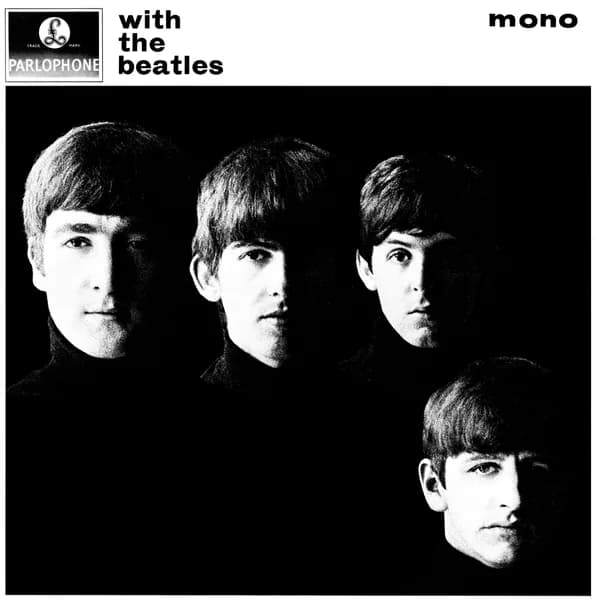
The record was never released as a single, arriving instead with With The Beatles, November 22, 1963. It ends the album, and it reached America five months later, on the Capitol album The Beatles' Second Album. This is their 32nd record, and the 30th of the 32 they released in that year.
affiliate link - supports this wiki
Sources & references
Tags on this page are original analysis, transcribed and cross-checked against the fine work of others: Alan W. Pollack's “Notes on…” series, the Beatles Complete Scores (Hal Leonard), Mark Lewisohn's session histories, Ian MacDonald's Revolution in the Head, Dave Rybaczewski's Beatles Music History and Andy Babiuk's Beatles Gear for the instruments and studio equipment, and others besides - then verified by ear against the recordings. Full bibliography: Sources & thanks.
External entity links: Wikipedia · MusicBrainz recording · MusicBrainz work · Wikidata
Updated
Feedback
Got a tag idea for Money (That's What I Want)? Or think we've got it all wrong - no, no, no? Don't let it be.