What Goes On
“I could feel my future fold”
What is unique about this song?
This is the only time a Beatles song shows the mark of Carl Perkins, and one of the early songs as well. This song is where the Gretsch 6119 Tennessean leaves their records, after 24 before it, such as 'Slow Down' and 'Things We Said Today'.
What happened around it?
see full timeline →'Michelle' and 'Think for Yourself' were being made at the same time. By the time the Beatles cut it, work on Rubber Soul had been going three weeks. At that point, 3 weeks after the session, the band filmed the promo for 'Day Tripper'. Also 2 weeks earlier, the death penalty was abolished in the UK.
This song is the only Beatles song with carl perkins influence as a discernible influence.
● hover for more info● tap a tag for its page and notes
Text316 tags
There are questions in the lyric (Repeated 'What goes on in your heart/mind?'), and the lyric touches the motifs of storytelling and sadness. Formally it is confessional in tone, most at home in the Beatles' 1968 writing. The writing reaches for anaphora and simile. Incidentally, the line "In the morning" turns up in 6 Beatles songs, among them 'Roll Over Beethoven', 'Norwegian Wood (This Bird Has Flown)' and 'For You Blue'.
Recurring words
Cover-shared words
Lyric shape
Cover-shared shape
Distinctive word
affiliate link - supports this wiki
Music113 tags
'What Goes On' moves at about 118 BPM in E major, a country rock and rockabilly song with Carl Perkins influences (country-rockabilly lead voicings). The tune carries call and response, the backing vocals answering the lead singer (Ringo lead answered by John/Paul 'Ooh') and an appoggiatura leaning against the chord, something the Beatles started 3 years before and went on doing for 41 songs. Then, it reaches for a sus4 chord, one that fifteen of their records feature, such as 'I'm Looking Through You' and 'I Need You'. It has a guitar solo.
affiliate link - supports this wiki
Studio10 tags
Recorded in a single overnight session at EMI Studio 2 on November 4, 1965 - rhythm track in one take with vocals and George's country lead guitar overdubbed in the same session, completed in roughly an hour. The Gretsch 6119 Tennessean on it was Harrison's country lead. The session was set up with the Ludwig Super Classic, Starr's own kit since 1964. The record closes with a fade-out, a habit that peaked in 1967. This was the 29th of the 33 songs the Beatles recorded in 1965, and the 98th of their career.
affiliate link - supports this wiki
People15 tags
Lennon, McCartney and Starr wrote it, and Starr sings lead (a middle-eight contribution). It exists to give Ringo something to sing. McCartney is credited with 'Ooh' responses, a habit that peaked in 1963.
affiliate link - supports this wiki
Info18 tags
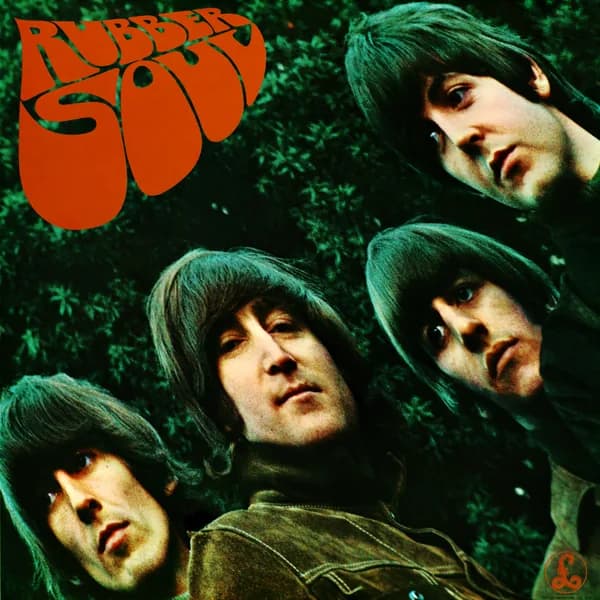
The track was released on the Rubber Soul LP (Dec 3, 1965). Issued in the US as the B-side of 'Nowhere Man' (Feb 21, 1966), charting at #81 in its own right, and later collected on Yesterday and Today (Jun 20, 1966). It got there six months later. This track was the 25th of 33 released in 1965, and the 94th counting from the start.
affiliate link - supports this wiki
Sources & references
Tags on this page are original analysis, transcribed and cross-checked against the fine work of others: Alan W. Pollack's “Notes on…” series, the Beatles Complete Scores (Hal Leonard), Mark Lewisohn's session histories, Ian MacDonald's Revolution in the Head, Dave Rybaczewski's Beatles Music History and Andy Babiuk's Beatles Gear for the instruments and studio equipment, and others besides - then verified by ear against the recordings. Full bibliography: Sources & thanks.
Updated
Feedback
Got a tag idea for What Goes On? Or think we've got it all wrong - no, no, no? Don't let it be.