I'm Looking Through You
“Love has a nasty habit of disappearing overnight”
What is unique about this song?
Starr reached for organ once, and this is the record. Oddly, the mono and the stereo versions differ (US stereo has two false guitar starts).
What happened around it?
see full timeline →Two weeks after work on Rubber Soul started, 'Nowhere Man' and 'We Can Work It Out' belong to the same run of sessions. Also 12 days before the session, the sitar reaches a Western pop record for the first time. Harrison played sitar on 'Norwegian Wood' at Abbey Road.
● hover for more info● tap a tag for its page and notes
Text206 tags
The lyric puts its case as a question ('Where did you go?', 'What did I know?'), and it touches the motifs of truth and autobiography, a habit that peaked in 1968. It uses personification ('Love has a nasty habit of disappearing'), and the writing draws on Bob Dylan.
Recurring words
Lyric shape
Cover-shared shape
Distinctive word
affiliate link - supports this wiki
Music145 tags
'I'm Looking Through You' is a folk rock song in A♭ major, a key the Beatles used 3 times in all (the earliest of them is 'A Taste of Honey' 2 years before). It moves at about 86 BPM, and you can hear a melodic bass (descending counterpoint under I-IV-ii rise). Also, the harmony reaches for a 7sus4 chord, which nine Beatles songs use, such as 'We Can Work It Out' and 'A Hard Day's Night'.
Chord shape
Chord literal
affiliate link - supports this wiki
Studio13 tags
This song was recorded at EMI Studio 1, three attempts in two-and-a-half weeks before Take 4 became the master. The US stereo mix preserves two false guitar starts. McCartney reached for the Epiphone Casino ES-230TD, his guitar. The kit in the room included the Ludwig Super Classic, Starr's own kit since 1964. Double tracked vocal was used in making the record, a habit that peaked in 1964. 1965 brought 33 songs, and this was the 27th of them, the 96th record of their career.
affiliate link - supports this wiki
People9 tags
McCartney wrote it and took the lead vocal, and the record has a role swap on it, Starr on organ. It has only the four of them playing on it, as on most of what they recorded in 1965.
affiliate link - supports this wiki
Info15 tags
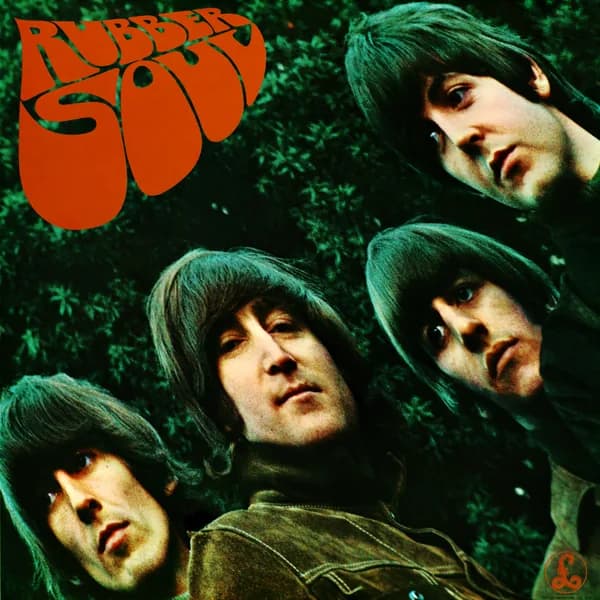
The public first heard it when Rubber Soul appeared on December 3, 1965. It reached America three days later, on the Capitol album Rubber Soul (US), with a different tracklist from the UK. This is the Beatles' 96th record, and the 27th of the 33 they released in that year.
affiliate link - supports this wiki
Sources & references
Tags on this page are original analysis, transcribed and cross-checked against the fine work of others: Alan W. Pollack's “Notes on…” series, the Beatles Complete Scores (Hal Leonard), Mark Lewisohn's session histories, Ian MacDonald's Revolution in the Head, Dave Rybaczewski's Beatles Music History and Andy Babiuk's Beatles Gear for the instruments and studio equipment, and others besides - then verified by ear against the recordings. Full bibliography: Sources & thanks.
Updated
Feedback
Got a tag idea for I'm Looking Through You? Or think we've got it all wrong - no, no, no? Don't let it be.