Michelle
“Sont des mots qui vont très bien ensemble”
What is unique about this song?
The song is one of the love songs, and one of the early songs. It also shows the mark of classical music. The song is one of only 10 Beatles songs with another language in the lyric, French here. This is the first Beatles song that uses an m7♭5 chord, and four more followed, such as 'Penny Lane' and 'You Never Give Me Your Money'. This song is where the Jose Ramirez classical leaves their records, after seven before it, alongside 'Till There Was You' and 'And I Love Her'.
What happened around it?
see full timeline →'What Goes On' and 'Think for Yourself' were on the tape around then too, and it was taped three weeks into the making of Rubber Soul. Worth noting, 3 weeks after the session, the band filmed the promo for 'Day Tripper'. In the same stretch, 2 weeks earlier, the death penalty was abolished in the UK.
The Beatles first used chromatic approach on 'Michelle' (1965).
● hover for more info● tap a tag for its page and notes
Text239 tags
The lyric takes in the motifs of communication, love and softness. The writing reaches for epistrophe (bridges end on 'understand' / 'mean'), and it is on more of the Beatles' 1964 records than any other year's. A curiosity, the title is one word and names somebody in particular, as it does in 'Matchbox', a year earlier, and it reaches once for triple rhyme ("belle/well/Michelle"). By accident or design, the line "I want you I want you" turns up in one other Beatles song, 'I Want You (She's So Heavy)'. Part of it is in French.
Recurring words
Cover-shared words
Lyric shape
Cover-shared shape
Distinctive word
affiliate link - supports this wiki
Music163 tags
'Michelle' is a ballad and baroque pop song, written in F major and taken at about 70 BPM, with classical music influences. The tune carries an appoggiatura leaning against the chord, and 1965 is the year the Beatles reached for it most. The record has fingerpicking rather than strumming (McCartney's chet-atkins style acoustic figure) and a bass going its own way against the chords. Also, the key moves from F major to F minor in the chorus, and it features a guitar solo. Oddly enough, the chords run C7 → F → B♭m7 → E♭, which is 'Only a Northern Song''s C♯7 → F♯7 → Bm7 → E in another key. This song plays Fm → Fm(maj7) → Fm7 → Fm6/D and 'Cry Baby Cry' plays Em → Em(maj7)/D♯ → Em7/D → Em6/C♯: the same progression in different keys.
Chord shape
affiliate link - supports this wiki
Studio12 tags
Cut as the album wound to a close at EMI Studio 2, basic acoustic/bass/drums track plus overdubbed lead guitar, backing harmonies and double-tracked vocal in a single day. Lennon played the Jose Ramirez classical on it, his nylon-string on the descending intro and transition figures. The record closes with a fade-out, and it is on more of their 1967 records than any other year's. It was the 28th of the 33 songs they recorded in 1965, and the 97th of their career.
affiliate link - supports this wiki
People12 tags
McCartney wrote and sang it. There is a role swap on it, McCartney on Classical guitar, and 12-string guitar is in there too. It has nobody but the four of them playing or singing, as on most of what they recorded in 1965. McCartney plays classical-style fingerpicked part on the acoustic guitar. Harrison is credited with a solo melody composed by George Martin, and 1965 is the year they reached for it most.
affiliate link - supports this wiki
Info20 tags
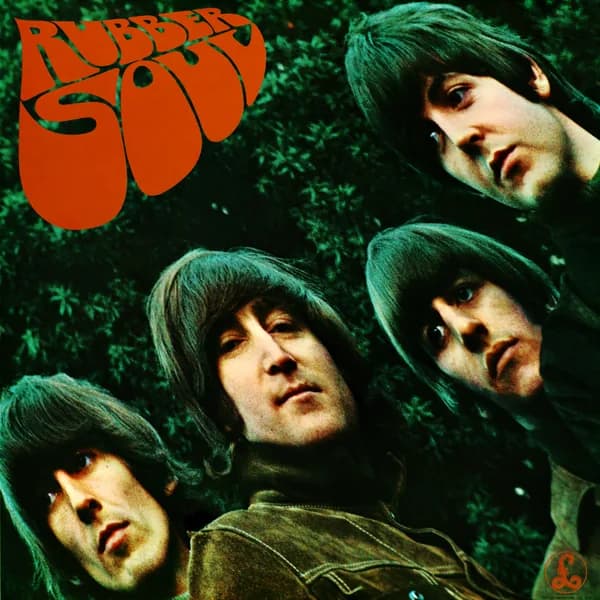
The public first heard it when Rubber Soul appeared on December 3, 1965, and it is also a Grammy winner. The record is widely covered as well (David & Jonathan, Booker T. & the M.G.'s, Bud Shank). In America it arrived three days later, on Rubber Soul (US), a Capitol record, with a different tracklist from the UK. This is the Beatles' 93rd record, and the 24th of the 33 they released in that year.
affiliate link - supports this wiki
Sources & references
Tags on this page are original analysis, transcribed and cross-checked against the fine work of others: Alan W. Pollack's “Notes on…” series, the Beatles Complete Scores (Hal Leonard), Mark Lewisohn's session histories, Ian MacDonald's Revolution in the Head, Dave Rybaczewski's Beatles Music History and Andy Babiuk's Beatles Gear for the instruments and studio equipment, and others besides - then verified by ear against the recordings. Full bibliography: Sources & thanks.
External entity links: Wikipedia · MusicBrainz recording · MusicBrainz work · Wikidata
Updated
Feedback
Got a tag idea for Michelle? Or think we've got it all wrong - no, no, no? Don't let it be.