The Word
“Have you heard the word is love?”
What is unique about this song?
This one has George Martin playing on it as well as producing. This is the first Beatles song that uses a power chord, and four more followed, such as 'Revolution' and 'Helter Skelter'.
What happened around it?
see full timeline →Four weeks into the making of Rubber Soul, 'Girl' and 'You Won't See Me' were cut in the same stretch of studio time. At the same time, one week before its release, the band filmed the promo for 'Day Tripper'. Further back, 2 weeks earlier, the death penalty was abolished in the UK.
The Spiritual motif first appears in the Beatles catalogue on 'The Word' (1965).
● hover for more info● tap a tag for its page and notes
Text222 tags
The motifs of spirituality, instruction and philosophy are in there, if not always in the foreground. 'Twist and Shout' and 'I'll Get You' had reached for the instruction motif 2 years before. The lyric turns to anaphora ('Say the word' opens successive lines), a habit that peaked in 1968. The writing draws on R&B and Bob Dylan. One for the word-counters, "misunderstood" turns up in no other Beatles lyric.
Lyric shape
Cover-shared shape
Distinctive word
affiliate link - supports this wiki
Music140 tags
A soul and R&B song with Motown influences (stax/Motown groove feel), 'The Word' sits in D major and moves at about 105 BPM. Listen for an ostinato, one figure repeating underneath and an appoggiatura, a leaning note that resolves late. The song runs on a 12-bar blues, which 32 of theirs do, such as 'Roll Over Beethoven' and 'Little Child'. Whether it was meant or not, its G7 → D7 → A → G → D7 chord progression is the move 'Long Tall Sally' makes as C → G → D7 → C7 → G.
affiliate link - supports this wiki
Studio10 tags
Cut in a single session at EMI Studio 2. George Martin added a harmonium overdub on the coda for a hymn-like fade. On this one McCartney played the Rickenbacker 4001S, his bass, a habit that peaked in 1967. They reached for the Ludwig Super Classic, Starr's own kit since 1964. Double tracked vocal was used on it, as on 139 of their records. This one came 31st of the 33 songs they recorded in 1965, and 100th in the whole career.
affiliate link - supports this wiki
People11 tags
Lennon wrote it and shares the lead with McCartney (Lennon called it mainly his, having written it as his first expression of the idea that love is the answer). George Martin played harmonium, as he also did on 'Cry Baby Cry' and 'Being for the Benefit of Mr. Kite!', and maracas are in there too.
affiliate link - supports this wiki
Info14 tags
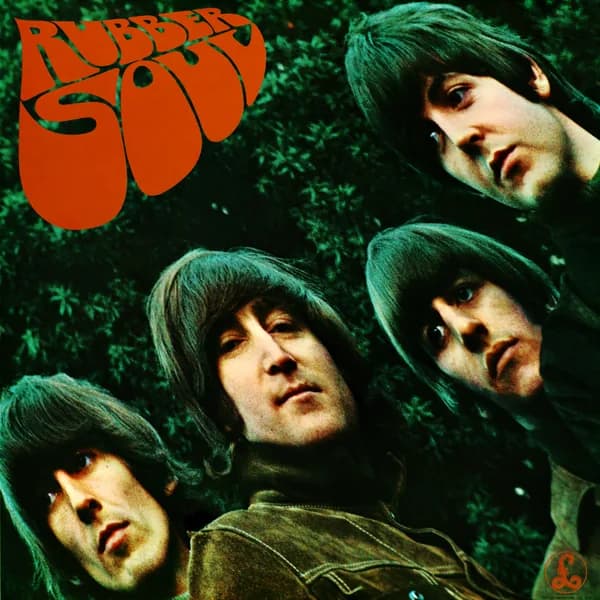
The track was never a single, and it reached the public with Rubber Soul, on December 3, 1965. It reached America three days later, on the Capitol album Rubber Soul (US), with a different tracklist from the UK. This is the Beatles' 92nd record, and the 23rd of the 33 they released in that year.
affiliate link - supports this wiki
Sources & references
Tags on this page are original analysis, transcribed and cross-checked against the fine work of others: Alan W. Pollack's “Notes on…” series, the Beatles Complete Scores (Hal Leonard), Mark Lewisohn's session histories, Ian MacDonald's Revolution in the Head, Dave Rybaczewski's Beatles Music History and Andy Babiuk's Beatles Gear for the instruments and studio equipment, and others besides - then verified by ear against the recordings. Full bibliography: Sources & thanks.
Updated
Feedback
Got a tag idea for The Word? Or think we've got it all wrong - no, no, no? Don't let it be.