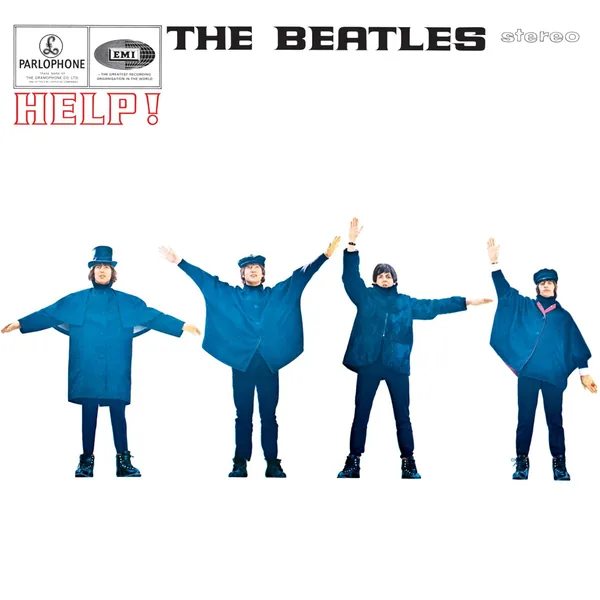
“When I was younger, so much younger than today”
What is unique about this song?
Strangely enough, the song is different in mono and in stereo (mono uses May 24 vocal overdub from CTS for film). This is the first Beatles song that has a descending bass, and 25 more followed, such as 'Yesterday' and 'In My Life'.
What happened around it?
see full timeline →The Beatles were cutting 'Dizzy Miss Lizzy' and 'Bad Boy' in the same stretch, and it went down eight weeks after work on Help! started. In those weeks, 3 weeks before the session, The Early Beatles came out in America, Capitol reissue of Vee-Jay material, released March 1965. Then 3 weeks later, the Yes It Is single also came out. Then 10 days later, Yes It Is also came out in America. Elsewhere, two days after Help!'s release, Dylan went electric at Newport Folk Festival.
Engineer Ken Scott handled the bulk of the White Album sessions. Credited on 85 Beatles recordings, including 'Eight Days a Week', 'Help!', 'Across the Universe'.
● hover for more info● tap a tag for its page and notes
Text281 tags
Time comes into the words ('When I was younger, so much younger than today'), and the lyric deals in the motifs of plea and self deprecation too. It is confessional in tone, which the Beatles used more in 1964 than in any other year. The writing reaches for anaphora. The title is worth a second look, since it is also the album's and also is written with an exclamation mark, something they had already used on 'A Hard Day's Night' a year earlier. Nothing else the Beatles recorded uses the word "independence".
Recurring words
Cover-shared words
Lyric shape
Cover-shared shape
Distinctive word
affiliate link - supports this wiki
Music130 tags
Written in A major and taken at about 94 BPM, 'Help!' is a folk rock and pop piece. The tune carries call and response, a line thrown out and thrown back (backing vocals echo lead in verses), something the Beatles had already used on 'Baby It's You' 2 years earlier. Also, the defining riff here is George's descending lead line under chorus. Listen to a descending bass (walking bass B→A→G under intro/chorus). The harmony takes in an added sixth chord, one that 21 of their records feature, such as 'From Me to You' and 'She Loves You'. Oddly enough, its A → C♯m → F♯m → D chord sequence is one 'Martha My Dear' plays too, there as B♭ → Dm → Gm7 → E♭.
affiliate link - supports this wiki
Studio11 tags
Recorded in twelve takes at EMI Studio 2, with John's lead vocal double-tracked onto take 9 alongside Ringo's tambourine. The Framus Hootenanny was John's 12-string acoustic, 1965 being the year it turns up most. The session was set up with the Ludwig Super Classic, Starr's own kit since 1964. The record carries double tracked vocal, as on 139 of their records. This was their 79th record, and the 10th of the 33 they recorded in 1965.
affiliate link - supports this wiki
People10 tags
The words and the music are both Lennon's, and it was cut by the standard four-piece, with 12-string guitar filling it out. The backing vocals here are anticipatory call lines in verses, 1965 being the year it turns up most.
affiliate link - supports this wiki
Info30 tags
The track was issued as the A-side single backed with 'I'm Down', and it topped both UK and US charts for three weeks each. It begins Help!, was certified gold (Capitol, certified 2 September 1965), and has since been a Grammy nominee. It is also a record with a promo film behind it (filmed 23 November 1965). America got it three weeks later, on Help! (US), put out by Capitol, with Only 7 Beatles tracks (versus 14 on the UK album), with 5 Ken Thorne orchestral score tracks filling side two. This song was the 5th of the 33 records they released in that year, and the 74th in their whole run.
affiliate link - supports this wiki
Sources & references
Tags on this page are original analysis, transcribed and cross-checked against the fine work of others: Alan W. Pollack's “Notes on…” series, the Beatles Complete Scores (Hal Leonard), Mark Lewisohn's session histories, Ian MacDonald's Revolution in the Head, Dave Rybaczewski's Beatles Music History and Andy Babiuk's Beatles Gear for the instruments and studio equipment, and others besides - then verified by ear against the recordings. Full bibliography: Sources & thanks.
Updated
Feedback
Got a tag idea for Help!? Or think we've got it all wrong - no, no, no? Don't let it be.