“You make me dizzy, Miss Lizzy”
What is unique about this song?
The record is the only one on Help! with ooh vocals, one of 54 such records in the catalogue. Of the 28 Beatles records that use ADT, this is the earliest.
What happened around it?
see full timeline →Three months after work on Help! started, 'Bad Boy' was cut at the same session. The band were working on 'Help!' in the same weeks. In the same weeks, 3 weeks before the session, Yes It Is came out in America. Then 7 weeks later, the Beatles for Sale (No. 2) EP also came out.
The Beatles first used Automatic Double Tracking (ADT) on 'Dizzy Miss Lizzy' (1965).
● hover for more info● tap a tag for its page and notes
Text229 tags
The motifs it works with are women, communication and love. The luck motif was not new to them, and 'Little Child' and 'Things We Said Today' got there 2 years before. It uses anaphora ('Run and tell your mama / Run and tell your brother'), a habit that peaked in 1968. An extrametrical rhyme arrives once, "marry you / Lizzy". One for the curious, the title names somebody in particular. Whether it was meant or not, the line "I want you to be" turns up in one other Beatles song, 'Now and Then'.
Cover-shared words
Cover-shared shape
affiliate link - supports this wiki
Music127 tags
In A major at roughly 136 BPM, 'Dizzy Miss Lizzy' is a rock and roll song, and the writing shows the influence of blues. You will notice the guitar solo, two solos, double tracked. You can hear a vocal ad-lib and a voice over the break on it, and it reaches for an added sixth chord, which 21 Beatles songs use. It is strophic, the same tune each time with new words, as sixteen of their songs are, such as 'Matchbox' and 'Mr. Moonlight'. A curiosity, the chords run E7 → A → D → A → E7 → D → A, a shape 'Bad Boy' also uses, there as G7 → C7 → F7 → C7 → G7 → F7 → C7. One more thing, this song is the only track on Help! with organ on it, one of 48 across the catalogue.
Chord shape
affiliate link - supports this wiki
Studio11 tags
The session was at EMI Studio 2, cut in seven takes during a single evening session, with Lennon overdubbing Vox Continental organ and Harrison double-tracking the lead guitar on the final take. Lennon played the Rickenbacker 325, his guitar, which they had last done on 'Boys' 2 years earlier. The kit in the room included the Ludwig Super Classic, Starr's own kit since 1964. The sound was built with ADT (double tracked vocal), one of 28 Beatles records to use it. The Beatles first used Automatic Double Tracking (ADT) here. This one came out of a two-song day, the 80th and 81st of their career.
affiliate link - supports this wiki
People7 tags
Larry Williams wrote it and Lennon sings lead. It sticks to the roles they usually take, with Lennon on rhythm guitar, McCartney on bass, Harrison on lead guitar and Starr on drums, and cowbell is in there too. Lennon is credited with a Vox Continental overdub, 1965 being the year he used it most.
affiliate link - supports this wiki
Info16 tags
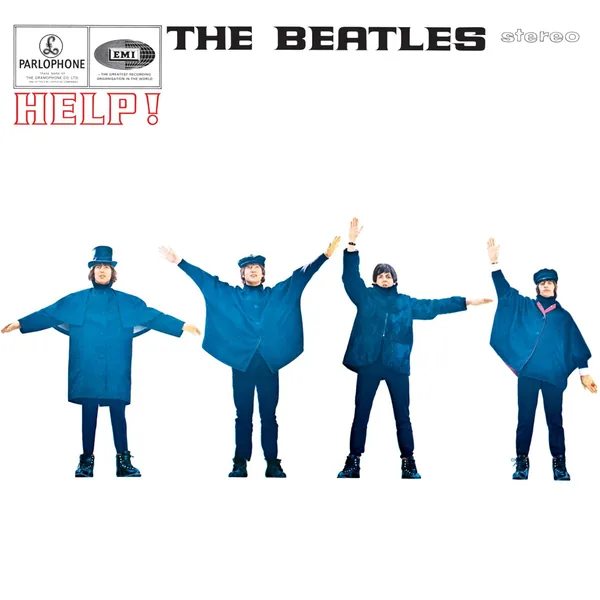
The record came out with Help! on August 6, 1965. On the record it brings to a close the album, and it reached America eight weeks earlier, on the Capitol album Beatles VI. This song was the 17th of the 33 records they released in that year, and the 86th in their whole run.
affiliate link - supports this wiki
Sources & references
Tags on this page are original analysis, transcribed and cross-checked against the fine work of others: Alan W. Pollack's “Notes on…” series, the Beatles Complete Scores (Hal Leonard), Mark Lewisohn's session histories, Ian MacDonald's Revolution in the Head, Dave Rybaczewski's Beatles Music History and Andy Babiuk's Beatles Gear for the instruments and studio equipment, and others besides - then verified by ear against the recordings. Full bibliography: Sources & thanks.
External entity links: Wikipedia · MusicBrainz recording · MusicBrainz work · Wikidata
Updated
Feedback
Got a tag idea for Dizzy Miss Lizzy? Or think we've got it all wrong - no, no, no? Don't let it be.