Mr. Moonlight
“Mr. Moonlight, come again, please”
What is unique about this song?
This is Roy Lee Johnson's only song in the catalogue. It is the first of twenty Beatles records to use the Leslie speaker, such as 'Tomorrow Never Knows' and 'I Want to Tell You'.
What happened around it?
see full timeline →'I'm a Loser' was cut at the same session. 'Baby's in Black' was recorded in the same days. Worth noting, 10 days after the session, Slow Down came out in America, released in the UK on the Long Tall Sally EP and in the US as the B-side of the Matchbox single, reaching #25 on the Billboard Hot 100. Not long before Beatles For Sale's release, the She's a Woman / I Feel Fine single also came out.
21 Beatles songs have a recording history spanning two months or more, including 'Mr. Moonlight', 'Octopus's Garden', 'Let It Be', 'Now and Then'.
● hover for more info● tap a tag for its page and notes
Text172 tags
Religion turns up in the lyric ('I'll pray and pray more each day' - worship of the moon), next to the motifs of magic and love, and it is on more of the Beatles' 1968 records than any other year's. The writing reaches for personification (moonlight as a 'Mister' who delivers a girl), which also turns up in 'Till There Was You', a year earlier. Oddly enough, the title names somebody (Personified moon as 'Mr.').
Cover-shared words
Cover-shared shape
affiliate link - supports this wiki
Music121 tags
'Mr. Moonlight' runs near 85 BPM in F♯ major, and it is a R&B and rock and roll piece from beginning to end. The song is strophic, meaning the same music each time with new words and no chorus at all, like sixteen others of theirs, such as 'Dizzy Miss Lizzy' and 'Matchbox'. As it happens, the chords run B → F♯ → B → F♯ → D♯7 → G♯m7 → C♯7 → F♯, a shape 'Hold Me Tight' also uses, there as B♭ → F → B♭ → F → D7 → Gm → C7 → F. One more thing, this song plays D♯7 → G♯m7 → C♯7 → F♯ and 'Honey Pie' plays E7 → Am7 → D7 → G, the same progression in different keys, which 'I Will' also makes.
Chord shape
affiliate link - supports this wiki
Studio11 tags
The session was at EMI Studio 2, cut in four takes during the August 14 session, then revisited in October when Harrison's guitar solo was wiped and replaced with McCartney's Hammond organ overdub. The Beatles worked on it from 14 August to 18 October 1964. The Hofner 500/1 on it was McCartney's bass, and 1964 is the year he reached for it most. Double tracked vocal was used on it, as on 139 of their records. It shares its session day with one others, the 55th and 56th of their career.
affiliate link - supports this wiki
People12 tags
Roy Lee Johnson wrote it and Lennon sings lead. It was played the way the band normally lined up, with Lennon on acoustic guitar, McCartney on bass, Harrison on electric guitar and Starr on percussion. The record has a Hammond organ solo overdub on it, most at home in their 1965 writing.
affiliate link - supports this wiki
Info15 tags
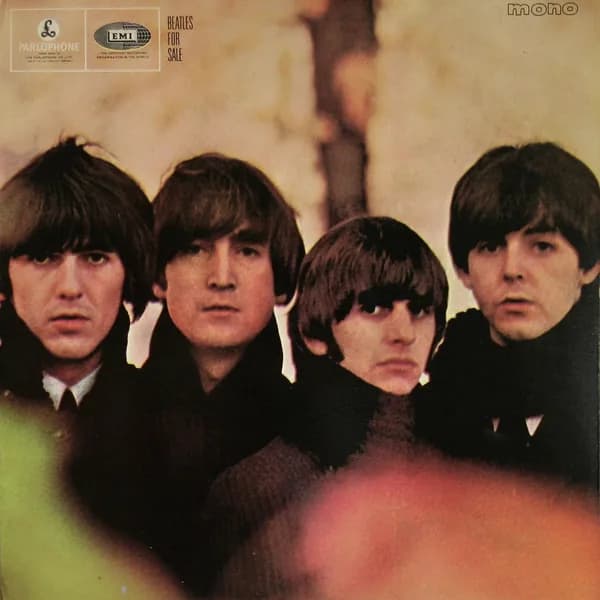
This track was never released as a single, arriving instead with Beatles For Sale, December 4, 1964. In America it arrived eleven days later, on Beatles '65, a Capitol record. This track was the 27th of 35 released in that year, and the 61st they ever made.
affiliate link - supports this wiki
Sources & references
Tags on this page are original analysis, transcribed and cross-checked against the fine work of others: Alan W. Pollack's “Notes on…” series, the Beatles Complete Scores (Hal Leonard), Mark Lewisohn's session histories, Ian MacDonald's Revolution in the Head, Dave Rybaczewski's Beatles Music History and Andy Babiuk's Beatles Gear for the instruments and studio equipment, and others besides - then verified by ear against the recordings. Full bibliography: Sources & thanks.
External entity links: MusicBrainz recording · MusicBrainz work · Wikidata
Updated
Feedback
Got a tag idea for Mr. Moonlight? Or think we've got it all wrong - no, no, no? Don't let it be.