Boys
“What a bundle of joy”
What is unique about this song?
The song is one of three that came out of Brill Building, the others are 'Baby It's You' and 'Chains'. It also was cut as a first take, and the Beatles covered Wes Farrell once, here. This is the first Beatles song that is sung with interjections and vocal ad-lib, and three more followed, such as 'Kansas City / Hey-Hey-Hey-Hey!' and 'All Together Now'.
What happened around it?
see full timeline →The band taped 'Twist and Shout' and 'There's a Place' at that session too. Most of Please Please Me went down in one session, and this song was part of it. Then 11 days after the session, Northern Songs Ltd was formed.
This song is the earliest Beatles song to use Interjections, which they use on 4 songs in all.
● hover for more info● tap a tag for its page and notes
Text150 tags
The lyric touches the motifs of sex, love and women. The writing reaches for onomatopoeia ('Bop shuop, m'bop bop shuop'), and this is where the onomatopoeia starts in the Beatles' writing. The title is one word long, and nothing earlier in the catalogue was like it. The language is full of nonsense words.
Cover-shared shape
affiliate link - supports this wiki
Music98 tags
Written in E major and taken at about 155 BPM, 'Boys' is a rock and roll and R&B piece. The tune carries call and response, a line thrown out and thrown back (lead + 'Bop shuop' backing), and 1963 is the year the Beatles reached for it most. It has a guitar solo. Also, the record has a vocal ad-lib (Ringo's 'Alright, George!'). A curiosity, the chords run E → A7 → E → B7 → A7, the same progression, transposed, as 'Flying' and 'Can't Buy Me Love'.
affiliate link - supports this wiki
Studio11 tags
The band cut it at EMI Studio 2, recorded in a single take near the end of the marathon Please Please Me album session, with George's guitar solo and Ringo's spoken 'Alright, George!' captured live. Lennon is on the Rickenbacker 325, his guitar, one of 44 Beatles records to use it, such as 'Please Please Me' and 'A Taste of Honey'. The record closes with a fade-out, and this one came out of a ten-song day, the 5th to the 14th of their career.
affiliate link - supports this wiki
People13 tags
Luther Dixon and Wes Farrell wrote it, and Starr sings lead. It exists to give Ringo something to sing, and 1963 is the year they reached for it most.
affiliate link - supports this wiki
Info19 tags
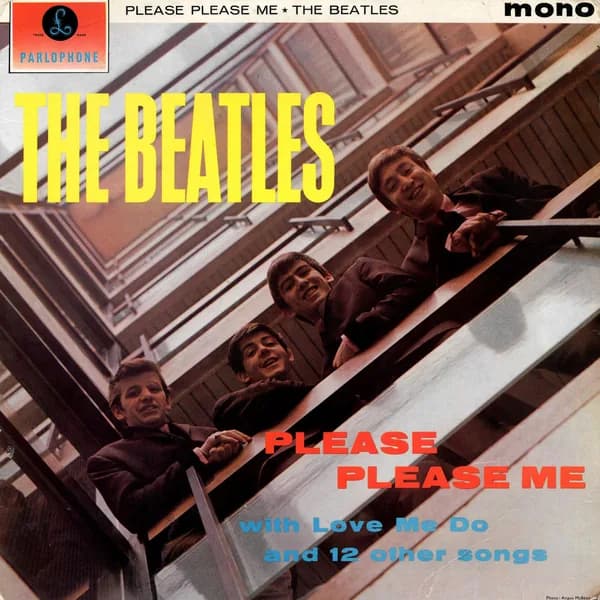
The track reached listeners on March 22, 1963, as one track among many on Please Please Me. America got it ten months later, on Introducing The Beatles, put out by Vee-Jay. This track was the 7th of 32 released in that year, and the 9th in their whole run.
affiliate link - supports this wiki
Sources & references
Tags on this page are original analysis, transcribed and cross-checked against the fine work of others: Alan W. Pollack's “Notes on…” series, the Beatles Complete Scores (Hal Leonard), Mark Lewisohn's session histories, Ian MacDonald's Revolution in the Head, Dave Rybaczewski's Beatles Music History and Andy Babiuk's Beatles Gear for the instruments and studio equipment, and others besides - then verified by ear against the recordings. Full bibliography: Sources & thanks.
External entity links: Wikipedia · MusicBrainz recording · MusicBrainz work · Wikidata
Updated
Feedback
Got a tag idea for Boys? Or think we've got it all wrong - no, no, no? Don't let it be.