All Together Now
“Can I have a little more?”
What is unique about this song?
The song is one of two that show the mark of skiffle, the other is 'One After 909', and one of the vaudeville-flavoured songs, pitched at the Beatles' parents' generation as well. This is the one song with Lennon playing ukulele.
What happened around it?
see full timeline →'Baby, You're a Rich Man' and 'You Know My Name (Look Up the Number)' were taped in the same days. Meanwhile, 3 weeks after the session, Sgt. Pepper's Lonely Hearts Club Band came out, the 1967 concept album that redefined what a rock record could be. And another thing, 3 days later, Hendrix opened his set with "Sgt. Pepper's". Elsewhere, between the session and Yellow Submarine's release, Led Zeppelin's debut album appeared.
This song is the only Beatles song with the AACBABCB song form.
● hover for more info● tap a tag for its page and notes
Text162 tags
Some of it is put as a question ('Can I have a little more?'), and the lyric touches the motifs of color and happiness. It is a list song, most at home in the Beatles' 1968 writing. The writing reaches for onomatopoeia ('Bom bom bom bompa bom'), 11 songs use it, the first of them 6 years before this one. A curiosity, the title comes in the chorus, and the language is full of nonsense words. Oddly enough, the line "Five six seven eight nine" turns up in one other Beatles song, 'Kansas City / Hey-Hey-Hey-Hey!'.
Lyric shape
Cover-shared shape
Distinctive word
affiliate link - supports this wiki
Music86 tags
In G major at roughly 100 BPM, 'All Together Now' is a children's and music hall song, with skiffle influences. The tune carries call and response, one voice asking and the rest answering (backing 'All together now' answers lead), and it is on more of the Beatles' 1963 records than any other year's. Also, the record features group vocals.
affiliate link - supports this wiki
Studio9 tags
Built layer by layer with party-style backing vocals from whoever was around the studio, plus John on ukulele and harmonica. That Rickenbacker 4001S is McCartney's bass, most at home in their 1967 writing. They worked with the Ludwig Super Classic drum kit and the Epiphone Texan FT-79, which had not been on a Beatles record for four years. Double tracked vocal shaped the finished record, as on 139 of their records. 1967 brought 25 songs, and this was the 16th of them, the 137th record of their career.
affiliate link - supports this wiki
People12 tags
McCartney wrote it and shares the lead with Lennon. The record has Lennon on ukulele, McCartney on french horn and percussion and Starr on finger cymbals, a role swap, and harmonica is in there too. You can hear a zill on it. The backing vocals in the mix are party-style, whoever was around, most at home in their 1968 writing.
affiliate link - supports this wiki
Info15 tags
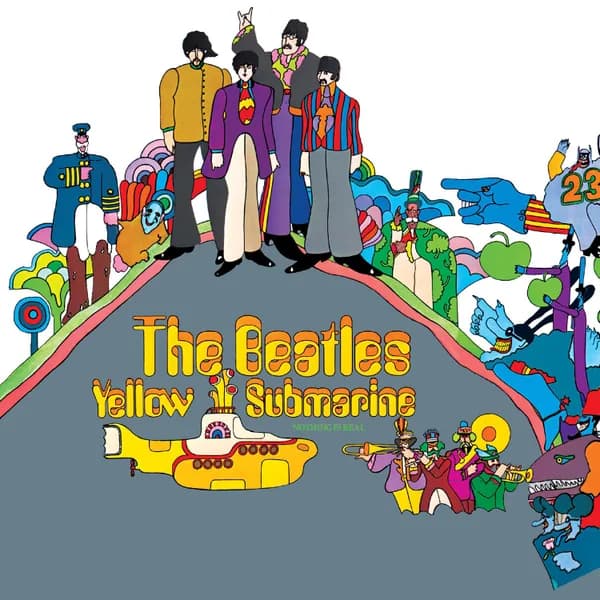
This track came out with Yellow Submarine on January 17, 1969. This is the Beatles' 178th record, and the 2nd of the 26 they released in 1969.
affiliate link - supports this wiki
Sources & references
Tags on this page are original analysis, transcribed and cross-checked against the fine work of others: Alan W. Pollack's “Notes on…” series, the Beatles Complete Scores (Hal Leonard), Mark Lewisohn's session histories, Ian MacDonald's Revolution in the Head, Dave Rybaczewski's Beatles Music History and Andy Babiuk's Beatles Gear for the instruments and studio equipment, and others besides - then verified by ear against the recordings. Full bibliography: Sources & thanks.
Updated
Feedback
Got a tag idea for All Together Now? Or think we've got it all wrong - no, no, no? Don't let it be.