“But you don't get me, you don't get me”
What is unique about this song?
This song shows the mark of Indian music. On Revolver this is the only one in E major, and one of 39 in all.
What happened around it?
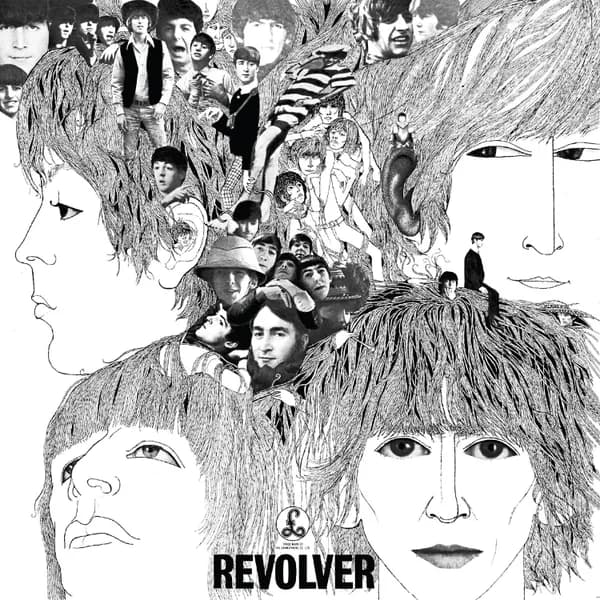
see full timeline →Two weeks after work on Revolver started, the same day's work produced 'Taxman', and the band recorded 'Doctor Robert' in the same days. In those weeks, 4 weeks before the session, Robert Whitaker photographed the band in white smocks with raw meat and dismembered dolls. Alongside it, 12 days later, Geoff Emerick became the Beatles' engineer. One other thing, 6 weeks later, Pet Sounds was released, the Beach Boys album McCartney called the greatest ever made, and a direct spur to Sgt. Pepper's.
Engineer Geoff Emerick took over from Norman Smith starting with Revolver, defining the band's mature studio sound. Credited on 74 Beatles recordings, including 'And Your Bird Can Sing', 'Magical Mystery Tour', 'Across the Universe'.
● hover for more info● tap a tag for its page and notes
Text162 tags
The song carries the motifs of social commentary, self reflection and sound. It uses irony (mock-congratulatory cataloguing of the addressee's boasts), as it does in 'Act Naturally', ten months earlier. One for the word-counters, "possessions" turns up in no other Beatles lyric.
Lyric shape
Cover-shared shape
Distinctive word
affiliate link - supports this wiki
Music93 tags
In E major at roughly 123 BPM, 'And Your Bird Can Sing' is a rock and jangle pop song, with Motown and Indian music influences (Toby Litt has called it a drone quality with raga phrasing in the twin-lead riff). There is a defining riff, Harmonised lead-guitar hook drives the song. Then, the record has a capo partway up the neck (2nd fret on the 26 April 1966 remake, D shapes sounding in E). The harmony takes in an augmented chord, which fourteen Beatles songs use, and Lennon reached for it more than the others, on nine of them.
affiliate link - supports this wiki
Studio11 tags
Cut at EMI Studio 2 with the band remaking the song a few days after an initial attempt. McCartney and Harrison overdubbed the harmonised twin-lead guitar parts together. The Epiphone Casino ES-230TD on the track is McCartney and Harrison's twin-lead tone. The kit in the room included the Ludwig Super Classic, Starr's own kit since 1964. The band reached for ADT (double tracked vocal) and close mic'ing on this one, the latter first heard 3 years earlier, on 'I Saw Her Standing There'. Two songs came off that day's tapes, the 109th and 110th of the career.
affiliate link - supports this wiki
People9 tags
Lennon wrote the song and sang it himself, and there is a role swap on it, McCartney on electric guitar. It has nobody but the four of them playing or singing, true of nine of the nineteen songs they cut in 1966. McCartney is credited with an upper harmony of the twin-lead riff.
affiliate link - supports this wiki
Info15 tags
Like most of the catalogue it was an album track, out on August 5, 1966 with Revolver. America got it seven weeks earlier, on Yesterday and Today, put out by Capitol. This song was the 11th of the 16 records the Beatles released in that year, and the 113th counting from the start.
affiliate link - supports this wiki
Sources & references
Tags on this page are original analysis, transcribed and cross-checked against the fine work of others: Alan W. Pollack's “Notes on…” series, the Beatles Complete Scores (Hal Leonard), Mark Lewisohn's session histories, Ian MacDonald's Revolution in the Head, Dave Rybaczewski's Beatles Music History and Andy Babiuk's Beatles Gear for the instruments and studio equipment, and others besides - then verified by ear against the recordings. Full bibliography: Sources & thanks.
Updated
Feedback
Got a tag idea for And Your Bird Can Sing? Or think we've got it all wrong - no, no, no? Don't let it be.