“A love that should have lasted years”
What is unique about this song?
This one shows the mark of Baroque, and it has a Beatle away (no Lennon, no Harrison). This is the only one of the fourteen songs on Revolver with a descending bass, which also turns up in 'Help!', a year earlier.
What happened around it?
see full timeline →The band recorded 'Eleanor Rigby' and 'I'm Only Sleeping' within a fortnight. By the time they cut it, work on Revolver had been going five weeks. Around then, 10 days after the session, the band filmed the promo for 'Rain'. In the background, 11 days later, the Rain single came out. Besides that, 2 days later, George began sitar study with Ravi Shankar. Further back, 2 weeks earlier, Pet Sounds was released, the Beach Boys album McCartney called the greatest ever made, and a direct spur to Sgt. Pepper's.
This song is the first Beatles record to feature french horn.
● hover for more info● tap a tag for its page and notes
Text229 tags
Its subject is a person rather than a feeling (Unnamed 'she' who no longer loves him), and it deals in the motifs of storytelling and self reflection. The writing is observational, told by somebody watching, a thing the Beatles returned to 36 times across 3 years. The lyric turns to anaphora (verses begin with 'You'/'She' parallel clauses). A curiosity, the title has a negative.
Recurring words
Lyric shape
Cover-shared shape
Distinctive word
affiliate link - supports this wiki
Music119 tags
'For No One' runs at roughly 80 BPM in B major, a baroque pop and ballad song with classical music behind it (and art-song traditions). This is one of only 5 Beatles records in that key, the earliest of them 'Doctor Robert'. You can hear a descending bass (walking bass under static B harmony) on it, and it features a French horn solo. Then, it reaches for a sus4 chord, heard on fifteen Beatles records in all, such as 'I'm Looking Through You' and 'What Goes On'. The key moves from B major to C♯ minor in the chorus. Listen for a countermelody under the tune (horn returns as counterpoint in final verses). Interestingly, the chords run G♯m → B/F♯ → E → A → B, the same move 'Something' makes as F♯m → A/E → D → G → A. This song is the first Beatles record to feature french horn.
affiliate link - supports this wiki
Studio10 tags
The tape rolled at EMI Studio 2, backing track of piano and drums cut in 10 takes. McCartney overdubbed clavichord and vocal, and Alan Civil added French horn pitched 'in the cracks' between B♭ and B. The Rickenbacker 4001S was McCartney's bass, most at home in their 1967 songs, and they reached for the Ludwig Super Classic, Starr's own kit since 1964. Close mic'ing was used in making the record, as on 42 of their records. 1966 brought 19 songs, and this was the 11th of them, the 113th record of their career.
affiliate link - supports this wiki
People9 tags
The words and the music are both McCartney's. The piano is a Steinway grand, main accompaniment, with maracas, french horn (solo above instrument's normal range) and clavichord (rented from AIR for the session) filling it out, and the clavichord appears on two Beatles records in all.
affiliate link - supports this wiki
Info14 tags
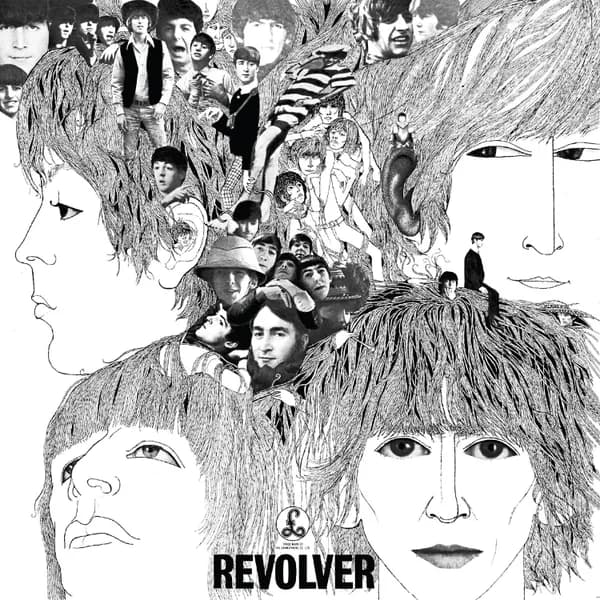
Like most of the catalogue it was an album track, out on August 5, 1966 with Revolver. In America it arrived three days later, on Revolver (US), a Capitol record. This track was the 12th of 16 released in that year, and the 114th in the Beatles' whole run.
affiliate link - supports this wiki
Sources & references
Tags on this page are original analysis, transcribed and cross-checked against the fine work of others: Alan W. Pollack's “Notes on…” series, the Beatles Complete Scores (Hal Leonard), Mark Lewisohn's session histories, Ian MacDonald's Revolution in the Head, Dave Rybaczewski's Beatles Music History and Andy Babiuk's Beatles Gear for the instruments and studio equipment, and others besides - then verified by ear against the recordings. Full bibliography: Sources & thanks.
Updated
Feedback
Got a tag idea for For No One? Or think we've got it all wrong - no, no, no? Don't let it be.