“Well, well, well, you're feeling fine”
What is unique about this song?
The song is one of only three that were recorded with a Mannborg harmonium, next to 'Real Love' and 'We Can Work It Out', and one of the character songs.
What happened around it?
see full timeline →Two weeks after work on Revolver started, 'Taxman' and 'And Your Bird Can Sing' were on the tape around then too. In the same stretch, 3 weeks before the session, Robert Whitaker photographed the band in white smocks with raw meat and dismembered dolls. Around the same time, 12 days later, Geoff Emerick became the Beatles' engineer.
This song is the only Beatles song with a VI to I section transition.
● hover for more info● tap a tag for its page and notes
Text185 tags
The track touches on money, and on the motifs of real people and social commentary. The writing is sung in a persona, a thing the Beatles had done before, on 'A Hard Day's Night' 2 years earlier. It uses anaphora (bridge lines begin 'Well, well, well'). The title turns up in the chorus and also gives a person's name, and the language is tonally neutral. The writing draws on the drug culture.
Lyric shape
Cover-shared shape
Distinctive word
affiliate link - supports this wiki
Music112 tags
'Doctor Robert' is a rock and psychedelic piece that moves at about 99 BPM, in A major. The tune carries an appoggiatura, a note taking its time to resolve, a thing the Beatles had done before, on 'This Boy' 3 years earlier. Then, the key moves from A major to B major in the bridge. Curiously, the chords run E/B → B → E/B → B → E/B → B → E/B → F♯7, the same move 'Good Morning Good Morning' makes as D → A → D → A → D → A → D → E. 'What You're Doing' plays G → D → G → D → G → D → G → A and this song plays E/B → B → E/B → B → E/B → B → E/B → F♯7: the same progression in different keys, which 'Good Morning Good Morning' also makes.
affiliate link - supports this wiki
Studio13 tags
Cut at EMI Studio 2 over two sessions, with a tape reduction freeing tracks for vocal and harmonium overdubs. An extended jam outro was edited off. The Gibson SG carried Harrison's lead guitar on the 17 April 1966 overdub, newly bought and his main lead, 1966 being the year he used it most. The kit in the room included the Ludwig Super Classic, Starr's own kit since 1964. ADT (double tracked vocal) was used in making the record, one of 28 Beatles records to use it, going back to 1965. This was the 6th of the 19 songs the Beatles began recording in 1966, and the 108th of their career.
affiliate link - supports this wiki
People9 tags
This track is Lennon's, words and voice, and McCartney is credited with the bridge section.
affiliate link - supports this wiki
Info15 tags
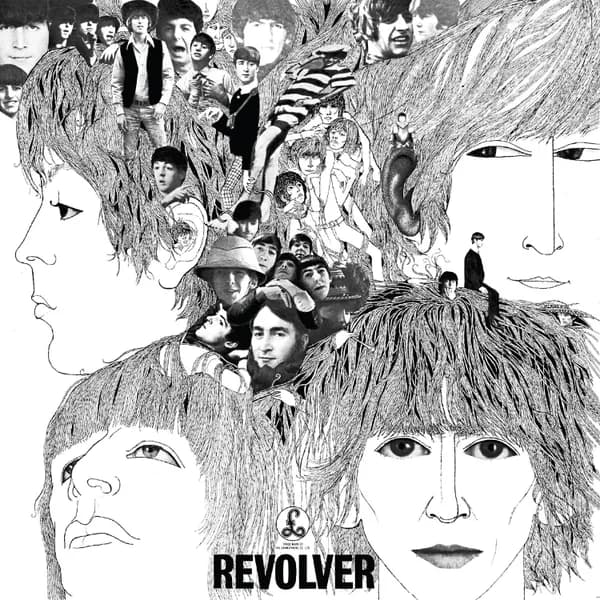
Out August 5, 1966 with Revolver. It was never lifted as a single, and it reached America seven weeks earlier, on the Capitol album Yesterday and Today. This is the Beatles' 115th record, and the 13th of the 16 they released in that year.
affiliate link - supports this wiki
Sources & references
Tags on this page are original analysis, transcribed and cross-checked against the fine work of others: Alan W. Pollack's “Notes on…” series, the Beatles Complete Scores (Hal Leonard), Mark Lewisohn's session histories, Ian MacDonald's Revolution in the Head, Dave Rybaczewski's Beatles Music History and Andy Babiuk's Beatles Gear for the instruments and studio equipment, and others besides - then verified by ear against the recordings. Full bibliography: Sources & thanks.
Updated
Feedback
Got a tag idea for Doctor Robert? Or think we've got it all wrong - no, no, no? Don't let it be.