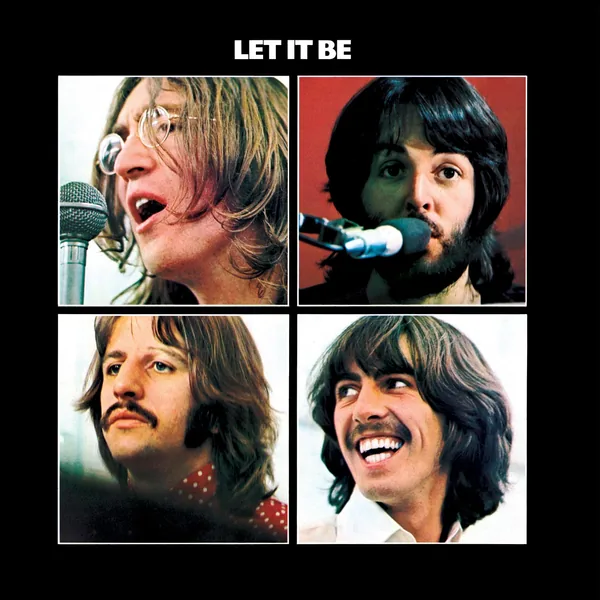
“Everybody had a hard year, everybody had a good time”
What is unique about this song?
The song stands as one of only two that were recorded with a Fender Bassman, next to 'Get Back', and one of the rooftop concert songs. It also was cut as a live recording (Apple rooftop, 30 January 1969).
What happened around it?
see full timeline →'One After 909' was on the same day's tape. 'Let It Be' was taped in the same days. On the studio floor, 3 weeks before the session, George quit. And another thing, 7 days later, Yellow Submarine came out. In the same stretch, 5 days later, George returned, and the sessions were moved to Apple Studios. In those weeks, 9 days earlier, Led Zeppelin's debut album appeared.
26 Beatles songs were recorded at studios other than EMI Abbey Road: Apple Studios (11 songs), Olympic Sound Studios (6 songs), Trident Studios (6 songs), Pathé Marconi Studios (3 songs), Hog Hill Mill (2 songs). This song is one of them.
● hover for more info● tap a tag for its page and notes
Text288 tags
The lyric takes in the motifs of love, relationship and self reflection. It is not the first time the Beatles reached for the rain motif, and 'Please Please Me' and 'I'm a Loser' did, 7 years before. There is anaphora in the writing. Have you noticed the title turns on the word get, 10 songs use it, the first of them 7 years before this one? For anyone keeping count, the line "Oh yeah oh yeah oh yeah" turns up in one other Beatles song, 'Glass Onion'.
Recurring words
Cover-shared words
Lyric shape
Cover-shared shape
Distinctive word
affiliate link - supports this wiki
Music148 tags
'I've Got a Feeling' is a blues rock and hard rock song, gospel influences showing through (Preston's electric piano), played at roughly 84 BPM in the key of A major. The harmony takes in a diminished chord, heard on eight Beatles records in all, and the performance shows a descending bass (diminished chords over A pedal). Then, it has a defining riff. Listen for call and response (Paul and John alternate, then overlap). The song is through-composed, meaning nothing in it repeats, like eight others of theirs, such as 'A Day in the Life' and 'You Know My Name (Look Up the Number)'. Fun fact, the harmony moves D/A → G → D → A → D/A → A, the same shape 'Rock and Roll Music' takes as A7 → D7 → A7 → E7 → A7 → E7. As a matter of detail, 'Glass Onion' plays Adim7 → A♭dim7 → Gdim7 → F♯dim7 and this song plays Edim/A → D♯dim/A → Ddim/A → C♯dim/A, the same progression in different keys.
Chord shape
affiliate link - supports this wiki
Studio13 tags
Captured live from the Apple rooftop in two complete takes. Engineers wrapped the microphones in stockings to shield them from the winter wind. It is one of only eleven Beatles records cut at Apple Studios. McCartney brought the Hofner 500/1, his bass, most at home in their 1964 songs. This was one of two songs recorded that day, the 191st and 192nd of their career.
affiliate link - supports this wiki
People13 tags
McCartney and Lennon wrote it, the two of them share the lead, as they do on 'Words of Love' and 'We Can Work It Out'. It was cut with a visiting musician, Billy Preston. Fun fact, Billy Preston on electric piano turns up on this one. McCartney brought his own unfinished 'I've Got a Feeling', which became the first half. Lennon brought 'Everybody Had a Hard Year', an unfinished song of his own that became the second half.
affiliate link - supports this wiki
Info19 tags
No single, no B-side. It arrived with Let It Be on May 8, 1970. The Beatles have 5 songs played on the Apple roof on 30 January 1969, and they are 'Don't Let Me Down', 'Get Back', 'Dig a Pony', 'One After 909' and this one. This song was the 9th of the 12 records they released in 1970, and the 211th in the order they were recorded.
affiliate link - supports this wiki
Sources & references
Tags on this page are original analysis, transcribed and cross-checked against the fine work of others: Alan W. Pollack's “Notes on…” series, the Beatles Complete Scores (Hal Leonard), Mark Lewisohn's session histories, Ian MacDonald's Revolution in the Head, Dave Rybaczewski's Beatles Music History and Andy Babiuk's Beatles Gear for the instruments and studio equipment, and others besides - then verified by ear against the recordings. Full bibliography: Sources & thanks.
Updated
Feedback
Got a tag idea for I've Got a Feeling? Or think we've got it all wrong - no, no, no? Don't let it be.