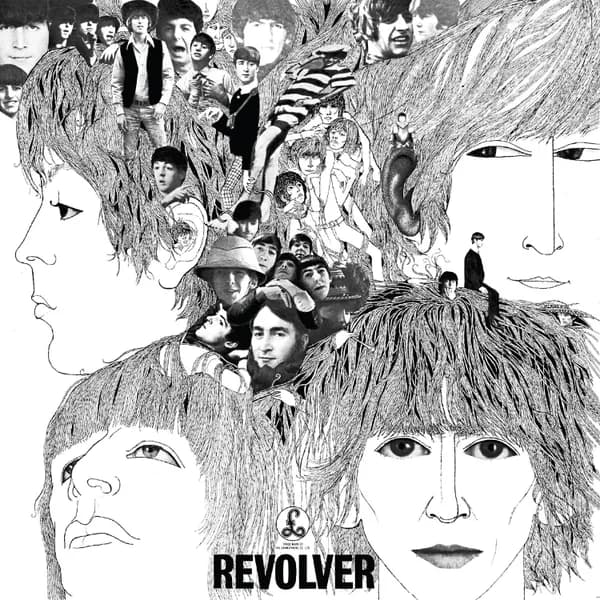
“I know what it's like to be dead”
What is unique about this song?
This song is one of two that reach for acid rock, 'It's All Too Much' being the other. It also shows the mark of Indian music. This is the one song on Revolver in a 3/4 time signature, out of the fourteen tracks it holds.
What happened around it?
see full timeline →'Here, There and Everywhere' and 'Good Day Sunshine' were cut in the same stretch of studio time. It was the last thing the band put on tape for Revolver. Worth noting, 3 weeks before the session, George began sitar study with Ravi Shankar. Then 2 weeks later, Yesterday and Today came out in America, a Capitol US-only compilation, June 1966. One other thing, 3 weeks later, the band was mobbed and nearly assaulted at the airport after unintentionally snubbing Imelda Marcos's breakfast reception.
The line "Know what it's like to" turns up in 2 Beatles songs: 'She Said She Said' and 'Hey Bulldog'.
● hover for more info● tap a tag for its page and notes
Text222 tags
The song touches on childhood ('When I was a boy, everything was right'), along with the motifs of drugs and found inspiration, which the Beatles used more in 1965 than in any other year. The title points at a woman, something they had reached for on 'I Saw Her Standing There' 3 years earlier, and the language is grim in subject (death, madness, dissociation) and built on a limited vocabulary. The writing draws on the drug culture. Incidentally, the line "Know what it's like to" turns up in one other Beatles song, 'Hey Bulldog'.
Recurring words
Cover-shared words
Lyric shape
Cover-shared shape
Distinctive word
affiliate link - supports this wiki
Music92 tags
In B♭ major at roughly 106 BPM, 'She Said She Said' is a psychedelic and acid rock song with Indian music influences underneath (modal guitar phrasing in lead lines). This is one of only 7 Beatles records in that key, the earliest of them 'Chains'. The tune carries call and response, the backing vocals answering the lead singer (she said / I said alternation), a thing they returned to 50 times across 3 years. Neither the key nor the meter stays put, since the key moves from B♭ major to E♭ major in the chorus, and the meter shifts under it. Also, the record features prominent drum fills.
affiliate link - supports this wiki
Studio14 tags
The record was recorded at EMI Studio 3, written, rehearsed and recorded in a single nine-hour session - the last song cut for Revolver. McCartney left after a row, so Harrison overdubbed the bass. Lennon added Hammond organ. The bridge shifts from 4/4 into 3/4 before snapping back for the final verse. The Gibson SG was Harrison's lead guitar, the 1964 SG Standard he took up at the start of the Revolver sessions. ADT (double tracked vocal) and close mic'ing shaped the finished record, the latter a thing they returned to 42 times across 3 years. It is taken out on a fade-out. This one came 16th of the 19 songs they recorded in 1966, and 118th in the whole career.
affiliate link - supports this wiki
People9 tags
This one is Lennon's, written and sung, and there is a role swap on it, Harrison on bass. It was recorded without all four (no McCartney - walked out after argument), and the drums play aggressive tom-led fills throughout. The organ plays a Hammond doubling guitar riff, which they used more in 1968 than in any other year.
affiliate link - supports this wiki
Info15 tags
This track came out with Revolver on August 5, 1966. America got it three days later, on Revolver (US), put out by Capitol. This track was the 9th of 16 released in that year, and the 111th counting from the start.
affiliate link - supports this wiki
Sources & references
Tags on this page are original analysis, transcribed and cross-checked against the fine work of others: Alan W. Pollack's “Notes on…” series, the Beatles Complete Scores (Hal Leonard), Mark Lewisohn's session histories, Ian MacDonald's Revolution in the Head, Dave Rybaczewski's Beatles Music History and Andy Babiuk's Beatles Gear for the instruments and studio equipment, and others besides - then verified by ear against the recordings. Full bibliography: Sources & thanks.
Updated
Feedback
Got a tag idea for She Said She Said? Or think we've got it all wrong - no, no, no? Don't let it be.