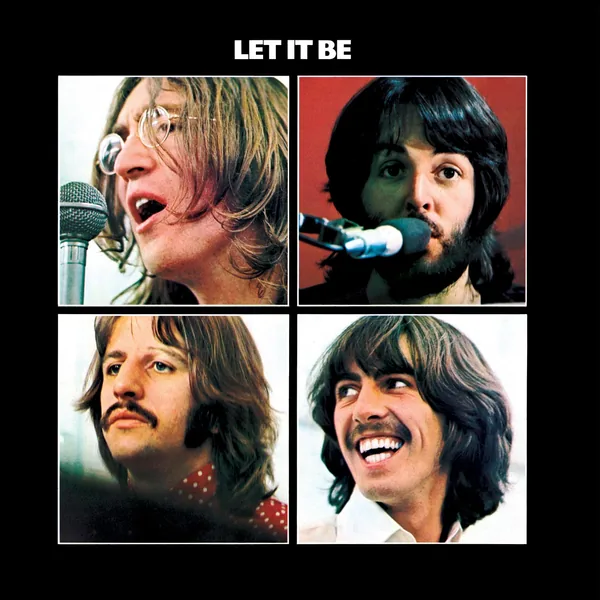
“Many times I've been alone, and many times I've cried”
What is unique about this song?
This song is one of three songs that show the mark of Ray Charles, 'I Feel Fine' and 'Something' among them, and one of the piano songs as well. Of all 217, this is the slowest record the Beatles made, at 63 beats a minute. Strangely enough, the song is different in mono and in stereo.
What happened around it?
see full timeline →'Dig It' came off the same tape, and the same run of sessions produced 'For You Blue'. 2 weeks before the session, George quit. And another thing, 7 days later, Yellow Submarine came out. At much the same time, 5 days later, George returned, and the sessions were moved to Apple Studios. In the same stretch, 9 days earlier, Led Zeppelin's debut album appeared.
John Lennon played bass on 6 Beatles songs - including 'Fixing a Hole', 'Back in the U.S.S.R.', 'Helter Skelter'. This song is one of them.
● hover for more info● tap a tag for its page and notes
Text221 tags
The words include a question ('Why leave me standing here?'), and the lyric touches the motifs of plea and self reflection, most at home in the Beatles' 1968 songs. The lyric turns to extended metaphor (road as life's journey back to lover). A triple rhyme arrives once, "away/day/way". The title is sung in the refrain, and the language is poetic. Curiously, the line "A long long time ago" turns up in one other Beatles song, 'Your Mother Should Know'.
Recurring words
Lyric shape
Cover-shared shape
Distinctive word
affiliate link - supports this wiki
Music206 tags
'The Long and Winding Road' is a ballad song in E♭ major, around 63 BPM, and it owes something to Ray Charles and gospel. This is one of only 5 Beatles records in that key, the earliest of them 'Girl'. It makes room for an orchestral group, a habit 3 years old by this point, and 16 songs deep. Then, listen to the shape and you find it never settles into verses and choruses. Interestingly, the chords run Fm → B♭7 → E♭ → E♭7 → A♭, a shape 'Real Love' also uses, there as Fm → B♭ → E♭ → E♭7/D → A♭. 'Good Night' plays D7 → G → Bm → Em and 'Golden Slumbers' plays G7 → C → Em → Am, the same progression in different keys, which this song also makes.
Chord degree
Chord shape
affiliate link - supports this wiki
Studio16 tags
Tracked at Apple Studios during the Get Back sessions with Billy Preston, the guest musician, on organ. Spector added the orchestral and choir overdubs at EMI Studios a year later. The Beatles started it in January 1969 and finished it in April 1970, and the Blüthner grand piano was played by Paul McCartney. Only four Beatles recordings have been through wall of sound, and this is one. Two songs came off that day's tapes, the 187th and 188th of the career.
affiliate link - supports this wiki
People19 tags
McCartney wrote this one and sang it. There is a role swap on it, Lennon on 6 string bass, as on 'Helter Skelter' and 'Dig It'. It has its producer on an instrument (Phil Spector). Billy Preston on electric piano came in to play on it. Strings, brass and woodwind sit behind the track, and the record has a Lennon on Fender VI six-string bass.
affiliate link - supports this wiki
Info22 tags
This track was issued as a US-only single in May 1970 and reached number one on the Billboard Hot 100. Not released as a UK single. You can hear it in the Let It Be film too, and on the soundtrack. This song was the 11th of the 12 records the Beatles released in that year, and the 213th they ever made.
affiliate link - supports this wiki
Sources & references
Tags on this page are original analysis, transcribed and cross-checked against the fine work of others: Alan W. Pollack's “Notes on…” series, the Beatles Complete Scores (Hal Leonard), Mark Lewisohn's session histories, Ian MacDonald's Revolution in the Head, Dave Rybaczewski's Beatles Music History and Andy Babiuk's Beatles Gear for the instruments and studio equipment, and others besides - then verified by ear against the recordings. Full bibliography: Sources & thanks.
Updated
Feedback
Got a tag idea for The Long and Winding Road? Or think we've got it all wrong - no, no, no? Don't let it be.