No Reply
“I saw you walk in your door”
What is unique about this song?
This track stands as twinned with 'Things We Said Today' for the Beatles' shared chorus feel, and it also has George Martin playing on it as well as producing.
What happened around it?
see full timeline →The band were recording 'Every Little Thing' and 'What You're Doing' in the same days. By the time they cut it, work on Beatles For Sale had been going seven weeks. Also 3 weeks after the session, feedback was used on a pop record for the first time, on 'I Feel Fine', recorded at Abbey Road. Ahead of Beatles For Sale's release, the She's a Woman / I Feel Fine single came out.
This song is the only Beatles song with a I to III section transition.
● hover for more info● tap a tag for its page and notes
Text262 tags
The song carries the motifs of plea, dialogue and relationship. A curiosity, the title turns on a negative, which the band first reached for on 'It Won't Be Long' a year earlier, and it reaches once for triple rhyme ("I/guy/reply"). Curiously, the line "I know that you" turns up in 3 Beatles songs, among them 'Act Naturally' and 'It Won't Be Long'.
Recurring words
Cover-shared words
Lyric shape
Cover-shared shape
Distinctive word
affiliate link - supports this wiki
Music200 tags
'No Reply' runs near 124 BPM in C major, and it is a pop and folk rock piece end to end. The record has a melisma, one syllable sung across several notes. Also, the harmony takes in an add9 chord, heard on eleven Beatles records in all, and McCartney reached for it more than the others, on six of them. The song is unusual here, in that it never settles into verses and choruses. Interestingly, the chords run F → G7 → C → F → G7 → C → Am, a progression it shares with one other Beatles song, 'Komm, Gib Mir Deine Hand'.
Chord shape
Chord literal
affiliate link - supports this wiki
Studio11 tags
Cut in eight takes at Abbey Road with George Martin overdubbing piano on the bridge. What you are hearing is Lennon and Harrison's acoustics, played on the Gibson J-160E, 1964 being the year it turns up most. Double tracked vocal shaped the finished record, as on 139 of their records. The Beatles recorded 35 songs in 1964, and this was the 26th of them, the 60th record of their career.
affiliate link - supports this wiki
People11 tags
Lennon both wrote and sang it. George Martin played piano, as he also did on 'Kansas City / Hey-Hey-Hey-Hey!' and 'Penny Lane'. The handclaps are all four Beatles.
affiliate link - supports this wiki
Info17 tags
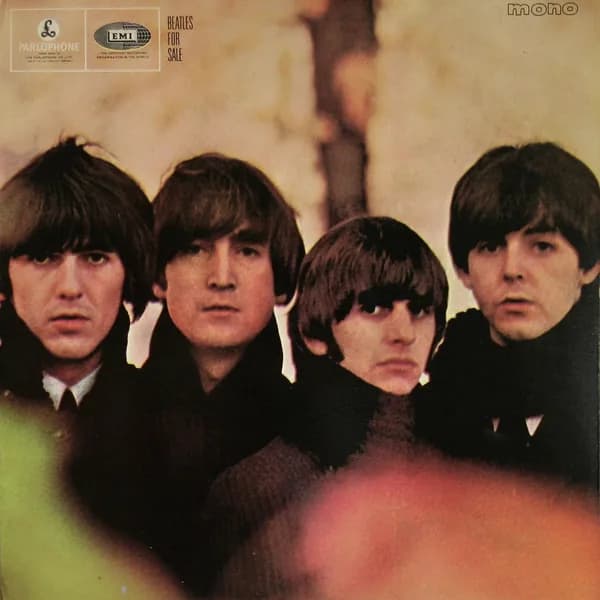
This track was never a single, and it reached the public with Beatles For Sale, on December 4, 1964. It starts the album, and in America it arrived eleven days later, on Beatles '65, a Capitol record. This track was the 22nd of 35 released in that year, and the 56th they ever made.
affiliate link - supports this wiki
Sources & references
Tags on this page are original analysis, transcribed and cross-checked against the fine work of others: Alan W. Pollack's “Notes on…” series, the Beatles Complete Scores (Hal Leonard), Mark Lewisohn's session histories, Ian MacDonald's Revolution in the Head, Dave Rybaczewski's Beatles Music History and Andy Babiuk's Beatles Gear for the instruments and studio equipment, and others besides - then verified by ear against the recordings. Full bibliography: Sources & thanks.
Updated
Feedback
Got a tag idea for No Reply? Or think we've got it all wrong - no, no, no? Don't let it be.