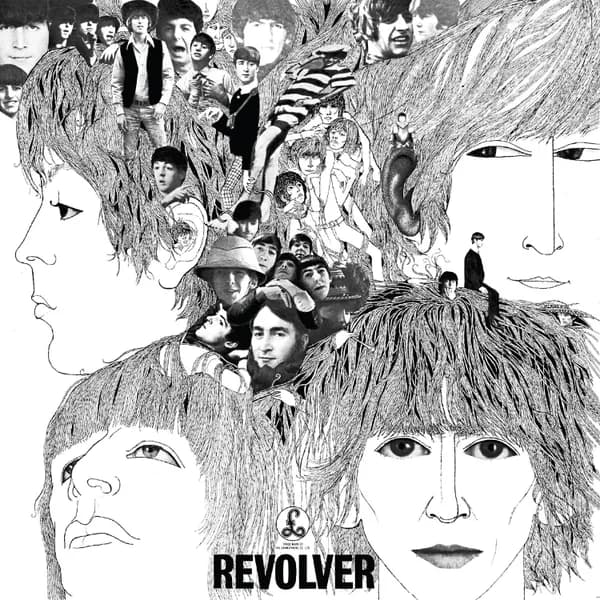
“I was alone, I took a ride”
What is unique about this song?
This track stands as one of two in all that show the mark of Stax, in company with 'Drive My Car'. It is the only one on Revolver that is R&B, one of 26 such records in the catalogue. This is different in mono and in stereo (mono runs 2:35, stereo 2:27). This song is the first Beatles record to feature saxophone.
What happened around it?
see full timeline →'Tomorrow Never Knows' and 'Love You To' were cut in the same stretch of studio time. Also 13 days before the session, Robert Whitaker photographed the band in white smocks with raw meat and dismembered dolls. In the same weeks, 12 days later, Geoff Emerick became the Beatles' engineer.
24 Beatles recordings feature a brass section. The first was 'Got to Get You into My Life' (1966).
● hover for more info● tap a tag for its page and notes
Text308 tags
Drugs come into the lyric (McCartney confirmed song is about marijuana), alongside the motifs of smoking and love, and they had done the same on 'Day Tripper' six months earlier. The lyric turns to double meaning (love song surface, ode to cannabis underneath). An extrametrical rhyme arrives once, "hold you / told". The title uses the word get and also runs exceptionally long, and the writing takes after R&B. One for the curious, the line "I want you to" turns up in 6 Beatles songs, among them 'Now and Then', 'You Really Got a Hold on Me' and 'Anna (Go to Him)'.
Recurring words
Cover-shared words
Lyric shape
Cover-shared shape
affiliate link - supports this wiki
Music147 tags
'Got to Get You into My Life' is a soul and R&B song in G major, around 125 BPM, and it owes something to Stax and Motown. It brings in woodwind players, which also turns up in 'You've Got to Hide Your Love Away', a year earlier. You can hear a melodic bass. Whether it was meant or not, its C → G7 → C → G7 → C → G → F chord progression is the move 'Get Back' makes as D → A → D → A → D → A → G.
Chord shape
affiliate link - supports this wiki
Studio15 tags
Reportedly conceived by McCartney as an ode to marijuana. An early acoustic-with-harmonium version was rebuilt as soul-style R&B with brass overdubs at EMI Studio 2. Work on it ran from 7 April to 17 June 1966, and they reached for the Ludwig Super Classic, Starr's own kit since 1964. Close mic'ing and ADT (double tracked vocal) were used in making the record. It is taken out on a fade-out, a thing they returned to 46 times across 3 years. Of the 19 songs they began recording in 1966, this was the 2nd, and the 104th they ever made.
affiliate link - supports this wiki
People17 tags
This song was written and sung by McCartney. There is a role swap on it, McCartney on electric guitar, with trumpet and tenor saxophone filling it out, the latter appearing on eight Beatles records in all. George Martin played organ, as he also did on 'Across the Universe (Wildlife version)' and 'Yes It Is'.
affiliate link - supports this wiki
Info19 tags
This track was released August 5, 1966, as part of Revolver. It got inside the American top ten (#7 Billboard Hot 100), and has been widely covered (Earth Wind & Fire, 1978, Cliff Bennett & the Rebel Rousers) ever since. Its first American album was Revolver (US), three days later. This song was the 15th of the 16 records the Beatles released in 1966, and the 117th counting from the start.
affiliate link - supports this wiki
Sources & references
Tags on this page are original analysis, transcribed and cross-checked against the fine work of others: Alan W. Pollack's “Notes on…” series, the Beatles Complete Scores (Hal Leonard), Mark Lewisohn's session histories, Ian MacDonald's Revolution in the Head, Dave Rybaczewski's Beatles Music History and Andy Babiuk's Beatles Gear for the instruments and studio equipment, and others besides - then verified by ear against the recordings. Full bibliography: Sources & thanks.
Updated
Feedback
Got a tag idea for Got to Get You into My Life? Or think we've got it all wrong - no, no, no? Don't let it be.